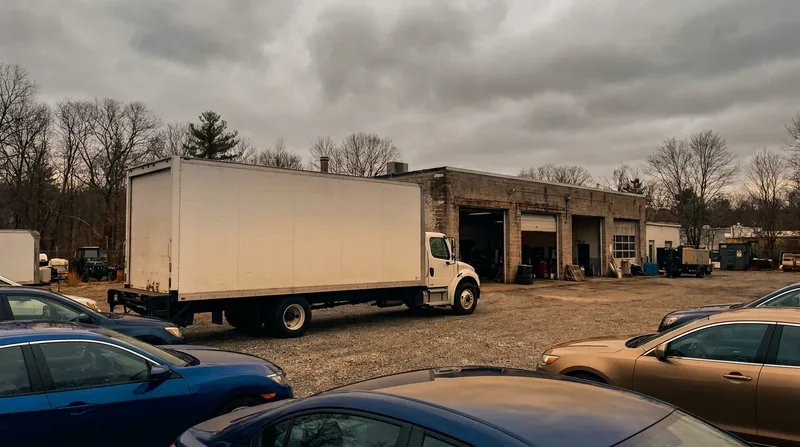
How to Start a Used Car Dealership in Indiana: Secretary of State Dealer License
How to Start a Used Car Dealership in Indiana: Secretary of State Dealer License
If you plan to sell used cars in Indiana, your license comes from the Indiana Secretary of State, not the Bureau of Motor Vehicles. That single detail trips up more first-time applicants than anything else. The Secretary of State's Auto Dealer Services Division issues the dealer license, reviews the bond and insurance evidence, and handles dealer plates. This guide walks through the process in the order you will need to complete it, with every fee and rule we could confirm from official sources.
Most people searching for an indiana dealer license, an indiana auto dealer license, or an indiana used car dealer license want the same answer: what to gather, what it costs, and what can get an application delayed. The summary is below, and the detailed steps follow.
Who issues the Indiana dealer license
The Auto Dealer Services Division of the Indiana Secretary of State issues the auto dealer license. The Division is located at 302 W. Washington St., Room E-111, and you can reach it at 317-234-7190. Call before you visit or mail anything, because staff can confirm which form version and portal path apply on the day you file. The main Secretary of State business page is at https://www.in.gov/sos/business/.
Applications are completed online in the Dealer Portal. Bond and insurance updates have been available online since October 1, 2024, so you should not plan around a paper process for routine renewals.
Materials you need before you apply
Gather these items before you open the Dealer Portal. A missing document often means starting the application over.
- A registered Indiana business entity, usually an LLC or corporation, with its Secretary of State filing confirmed
- A federal Employer Identification Number (EIN) from the IRS
- An Indiana registered agent and a registered office street address
- A location that meets the Division's dealer location rules (see Step 2)
- A $25,000 dealer bond on State Form 53966 from a surety company
- A certificate of insurance for the dealership
- A training course certificate, if you are a first-time used car dealer
- The $30 auto dealer license fee and your dealer plate fees
- A permanent sign that matches the exact licensed business name
How to get a dealer license in Indiana, step by step
Step 1: Form your business entity and check the name
Most dealers form an LLC or corporation before applying. An LLC files Articles of Organization, Domestic Limited Liability Company (State Form 49459), with a $95 filing fee. A corporation files Articles of Incorporation, Domestic Corporation (State Form 4159), also at $95. Both are filed through INBiz at https://inbiz.in.gov/.
Start with the name. An LLC name must include the words Limited Liability Company or an abbreviation of them, and it must be distinguishable from names already on the Secretary of State's records. Adding Inc., LLC, punctuation, or capitalization does not make a name distinguishable. Search the records at https://bsd.sos.in.gov/publicbusinesssearch before you commit. If you need time to line up your lease and bond, you can reserve the name for 120 days for $10 through INBiz.
Every entity must continuously maintain a registered agent and registered office in Indiana. The agent may be an Indiana resident whose business office is the registered office, or a business entity authorized to do business in Indiana. The office must be a street address, since a P.O. Box is not sufficient unless it comes with a rural route reference. Your dealership cannot act as its own registered agent.
Entity choice also affects taxes. Under current Indiana rules, LLC income generally passes through to the owners, who pay the 2.95% individual adjusted gross income tax for 2026 plus their county local income tax. Indiana has no franchise tax. An LLC that elects corporate treatment pays the 4.9% corporate adjusted gross income tax. This is general information, not tax advice, so confirm the choice with a CPA before you file.
Step 2: Lock in a location that meets the dealer rules
Location is where first-time applicants lose the most time. A dealer license requires a location that meets all of these conditions:
- It is in Indiana and is not a residence or a temporary location.
- It is open to the public at least 30 hours a week.
- It has at least 1,300 square feet, with display space for at least 10 vehicles.
- It has an office of at least 100 square feet with utilities.
- It has a permanent sign that matches the licensed business name.
- No other dealer or secondary business operates at the location.
- It is not in a retail complex, such as a strip mall.
Before you sign a lease, ask the landlord whether the space sits in a retail complex and whether another tenant already runs a dealer, repair, or other business there. Then check local zoning with your city or county. The state's Business Owner's Guide notes that local permits or zoning approval may also apply.
Step 3: Obtain the Indiana auto dealer bond
Any license application must be accompanied by evidence of a $25,000 dealer bond on State Form 53966 (R7 / 03-24), under IC 9-32-11-2. The Division does not accept older versions of this form, so download the current version directly from the Division and do not reuse a copy from an earlier application or a dealer association packet. The Division's published guidance lists no exemption from the bond requirement, so include it in your startup budget.
The bond premium is set by the surety company and depends on your credit and experience, so this guide does not list one. Get quotes from more than one surety, and make sure the principal name on the bond matches your registered entity name exactly. A lapse in the bond suspends the license. Calendar the renewal date, and submit the update online through the Dealer Portal before the bond expires.
Step 4: Buy the certificate of insurance
A certificate of insurance is required for the dealership. The Division's guidance does not publish minimum coverage limits in the sources we checked, so ask the Division and your insurance agent what coverage is required before you buy a policy. Insurance updates are submitted online in the same Dealer Portal as bond updates. Before you submit, check that the named insured and the location on the certificate match your licensed entity and address.
Step 5: Complete the training course if you are a first-time used car dealer
If you have never held a used car dealer license in Indiana, you must complete a training course. The course is presented by the Indiana Independent Automobile Dealers Association. Confirm the current course format, cost, length, and how the completion certificate is submitted with the association and the Division before you enroll. Schedule the course early, because you will need the certificate before the application is complete.
Step 6: Submit the application and pay $30
Apply online through the Dealer Portal. The fee for an auto or auction dealer license is $30, as shown on the Division's fee chart under IC 9-32-11-2(k). Before you submit, check that every document lines up: the entity name, the location address, the bond, the insurance certificate, and the training certificate. Keep the approved license in your records, and plan to present it when you order dealer plates.
Step 7: Order dealer plates
Dealer plates are priced separately from the license. Initial dealer plates cost $40 plus a $5 service charge. Each additional dealer plate costs $15 plus a $5 service charge, or $20 per plate. These fees are set under IC 9-32-6. Estimate how many plates you need before you order, since every additional plate adds to your startup cost.
Step 8: Handle tax, reporting, and other ongoing items
Indiana's state sales tax rate is 7%. If you sell taxable goods, you may need to register with the Indiana Department of Revenue. The state lists a $25 Registered Retail Merchant Certificate for that purpose. Confirm the current requirement at https://www.in.gov/dor/i-am-a/business-corp/business-education/register-business/ before your first sale. Indiana does not have one single comprehensive business license, so ask your city or county separately about local permits and zoning.
Your entity also has a recurring filing. The Business Entity Report costs $32 and is due every other year, by the end of the month in which the business was formed or registered. The first report is due two years after formation. Put that date on your calendar on day one.
If you also plan to take in wrecked vehicles for parts, an automotive salvage recycler is a separate license class with a $10 license fee. Your dealer license does not cover that work.
Costs at a glance
| Item | Amount | Notes |
|---|---|---|
| LLC Articles of Organization | $95 | State Form 49459, filed through INBiz |
| Corporation Articles of Incorporation | $95 | State Form 4159, filed through INBiz |
| Name reservation | $10 | Holds the name for 120 days |
| Auto or auction dealer license | $30 | Division fee chart, IC 9-32-11-2(k) |
| Indiana auto dealer bond | $25,000 bond | State Form 53966; premium set by the surety, not published |
| Initial dealer plates | $40 plus $5 service charge | IC 9-32-6 |
| Additional dealer plates | $15 plus $5 service charge each | IC 9-32-6 |
| Business Entity Report | $32 | Every other year; first due two years after formation |
| Registered Retail Merchant Certificate | $25 | Confirm with the Department of Revenue if you sell taxable goods |
| Automotive salvage recycler license | $10 | Separate class, only if you take in salvage |
| Insurance and training course | Confirm | Coverage minimums and course cost are not listed in the sources we checked |
Common mistakes to avoid
- Applying through the BMV. The dealer license is issued by the Secretary of State's Auto Dealer Services Division.
- Using an old bond form. Older versions of State Form 53966 are not accepted, and a lapse suspends the license.
- Leasing the wrong space. Strip malls, residences, shared-business locations, and spaces that are open fewer than 30 hours a week do not qualify.
- Naming the sign differently from the license. The permanent sign must match the licensed business name.
- Using a P.O. Box as the registered office. The registered office must be a street address.
- Naming yourself as registered agent for your own business. A business cannot serve as its own registered agent.
- Choosing a name that is not distinguishable. Changing only the entity identifier, punctuation, or capitalization does not make a name unique.
- Forgetting the first Business Entity Report. It is due two years after formation, then every other year.
Tips from the filing process
- Lock in the location and the name first. Almost every other document depends on them.
- Request bond quotes early, and compare more than one surety before you sign a lease.
- Ask the Division to confirm the current form versions, portal steps, and processing time before you pay anything.
- Use the Indiana Small Business Development Center at https://isbdc.org/ to review your plan with an advisor before you commit to a lease.
What to expect after you file
Once your application, bond, insurance, and training items are complete, the Division reviews the file. The Secretary of State does not publish a processing time for dealer applications in the sources we checked, so plan for a waiting period and ask the Division for a current estimate. A gap in one document can hold up the whole file, which is why a complete first submission saves time.
With a complete and accurate application, a location that meets every rule, and a bond that stays current, many applicants can expect to hold a license that allows them to operate as a dealer. Results depend on the Division's review and on your continued compliance after approval.
Disclaimer
This article is informational only and is not legal, tax, or financial advice. Dealer licensing rules, forms, bond requirements, and fees can change. Confirm every figure with the Indiana Secretary of State's Auto Dealer Services Division and the Indiana Department of Revenue before you file or pay. For complex situations, such as entity structure, lease terms, or tax treatment, consult a qualified Indiana attorney or CPA.